

 I think many horse racing fans have aspirations of owning a thoroughbred racehorse. I often think the thought is better than the reality as I’m sure the horse in mind wins race after race until it takes a Classic in its stride. The reality is that 80% of horses never win a race and I think that 70% of the money you spend on buying a horse is lost. The finances of racehorse ownership are enjoy to put anyone off. In addition, the cost of training a horse are from £20 – £30K a year. When you consider that your average run-of-the-mill race is worth £5,000 it makes grim reading. However, that doesn’t mean to say you should become an owner or think of cheaper alternatives.
The cost of outright ownership has led to horse racing syndicates. This can mean many things from a small group of individuals owning a race horse between them and sharing costs and price money to simply being little more than an owner in the most limited form. I remember back in the day big advertisements in the tabloids for Full Circle. A horse racing syndicate where you basically got a share in a horse for perhaps £50. That’s just about all you got. No chance to go to watch your horse on the gallops, no say in anything about future plans, no price money and perhaps an email saying your horse was running on so and so date and it had an each-way chance.
Basically, you were simply paying for someone else’s enjoyment.
There are many syndicates which meet varying needs. Some are from larger syndications such as Middleham Park Racing who have a great track record and horses at many different price points. While many trainers have horses syndicated.
There is just about something for everyone to meet the budget of all.
You can spend multiple thousands or a few hundred.
I would consider paying less than more simply because the likelihood of seeing a return on your investment is slim. Personally, I wouldn’t be too happy about losing a couple of thousand even with have the fun and enjoyment of being an owner.
There are far too many syndications to name they all have pros and cons.
However, I think the aim of being an owner (within a syndicate) is this:
To have a few horses in a syndicated.
To have the opportunity to visit the stable for open days and special occasions.
To be able to get your horse trainer and owners badge so you can go to the course for free.
To have the opportunity to meet the trainer and be part of a group to enjoy the day and socialise.
To be given the latest information on the chances of your horse(s) when racing.
And do so at a very affordable rate.
You may be saying: ‘This sounds too good to be true!’
I have personal experience of one such horse racing syndicate who really give value for money. In fact, I am amazed the don’t charge much more because they should do.
The horse trainer in question is Julia Feilden whose stables are at Exning Newmarket. I have met Julia on a few occasions as I was part of the gang at Newmarket Equine Tours (N.E.T) Racing Club. As they say: ‘For just £200 per year, you will be involved with not just one but Four horses!
As a member, you will received complimentary owners’ badges to the races, race day hospitality, unlimited stable visits, email updates, and invites to organised owners’ events…there are no catches!
If you are interested in horse racing ownership, I would say to check out Julia’s website and be part of a racing syndicate that really goes above and beyond what you will find elsewhere.
I can say this as a personal testament and I was nothing but impressed. To be fair, I don’t think Julia does it for the money, just the love of racing which you will find no more passionate trainer.
Why not come along and enjoy it too.
 Mill House was finally retired from racing at the end of 1967/68 National Hunt season after falling in the Whitbread Gold Cup, now the Bet365 Gold Cup, at Sandown Park. It is a testament to his ability that, six decades later, he remains the joint-fourth highest-rated steeplechaser in the history of Timeform, alongside Kauto Star and behind only Arkle, Flyingbolt and Sprinter Sacre. Standing almost 18 hands high, hence his nickname, ‘The Big Horse’, Mill House was owned, after his first three starts in his native Ireland, by retired businessman William ‘Bill’ Gollings, trained by the legendary Fulke Walwyn and ridden, for most of his career, by Willie Robertson, who was stable jockey to Walwyn at Saxon House Stables in Upper Lambourn, Berkshire.
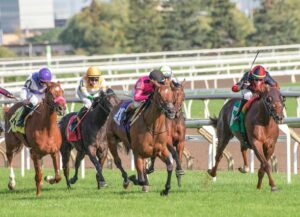
 Since 2015, because of concerns about the health and well-being of participants, the Flat Jockeys’ Championship has been decided on the number of winners ridden during a foreshortened season. That season runs from the Guineas Festival at Newmarket to British Champions Day at Ascot or, in other words, in 2024, from May 4 until October 19, which equates to exactly 24 weeks.
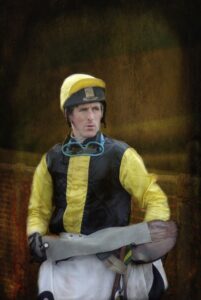 Of course, the Conditional Jockeys’ Championship is contested by relatively inexperienced, professional jockeys, under the age of 26, who have ridden not more than 75 winners under the Rules of Racing. In 2023/24, the Championship, which is decided on the number of winners ridden under National Hunt Rules, runs from May 1, 2023 until the Bet365 Jump Finale, at Sandown Park, on April 27, 2024.