
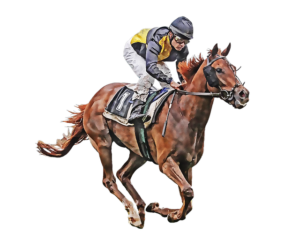
 At the time of his death, on June 13, 2013, Sir Henry Richard Amherst Cecil was hailed by ‘The Scotsman’ as ‘Britain’s greatest racehorse trainer of the past five decades’. Born in Aberdeen on January 11, 1943, Cecil nevertheless became the epitome of a quintessential English gentleman; calm, polite and softly spoken, he was as a universally popular as he was successful.
Cecil first took out a training licence at Freemason Lodge Stables on Bury Road, Newmarket, where he succeeded his step-father, Sir Cecil Boyd Rochford, in 1968. He saddled his first winner, Celestial Cloud, in an amateur riders’ maiden stakes race at Ripon, on May 17, 1969. By the time Cecil succeeded his father-in-law, Sir Noel Murless, at Warren Place on nearby Moulton Road at the end of the 1976 season, he had already won back-to-back renewals of the 2,000 Guineas, with Bolkonski in 1975 and Wollow in 1976. He sent out both winners from his interim base at Marriot Stables, now Chestnut Tree Stables, on the Hamilton Road, with Wollow also contributing the Eclipse Stakes, Sussex Stakes and Juddmonte International Stakes towards his first trainers’ title.
Cecil was crowned Champion Trainer again in his year at Warren Place, 1978, and would go on to win eight more trainers’ titles in 1979, 1982, 1984, 1985, 1987, 1988, 1990 and 1993. Indeed, between the late seventies and the early nineties, the name ‘H. R.A. Cecil’ on a racecard, alongside those of Joe Mercer, Lester Piggott and Steve Cauthen, who were successive stable jockeys at Warren Place, was guaranteed to quicken the blood of the average racegoer.
However, in 1995, the relationship between Cecil and leading owner Sheikh Mohammed deteriorated and, ultimately, broke down completely after a series of disagreements. The susbequent removal of 40 horses from Warren Place inevitably led to a downturn in the fortunes of the, by then, 10-time Champion Trainer and, for a period, his career looked to be in terminal decline. For a period of just over six years, between July 2000 and October 2006, Cecil failed to saddle a single Group 1 winner and, in 2005, his seasonal tally was just 12 winners, down from a career-best 119 winners back in 1991.
Furthermore, in 2006, it was revealed that Cecil was undergoing treatment for the stomach cancer that would, tragically, end his life on June 11, 1973. Nevertheless, despite constant ill health, it was testament to the courage and competitiveness of the man that, under the auspices of long-standing ally Khaled Abdullah, in particular, Cecil increased his seasonal tally to 25 winners in 2006, 45 in 2007 and, thereafter, saddled 52 or more winners for the next five seasons running.
A truly masterful horseman, particularly adept at training fillies, Cecil won the Oaks eight times – including with Fillies’ Triple Crown winner Oh So Sharp in 1985 – the 1,000 Guineas six times, The Derby and the St. Leger four times apiece and the 2,000 Guineas. Yet, for all his Classic success, it is likely that Sir Henry Cecil will likely always be best remembered for his association with one horse, Frankel, who completed his unbeaten 14-race career on British Champions Day at Ascot on October 21, 2012 and remains the highest-rated Flat horse in history of Timeform, which began shortly after World War II. By that stage, Cecil had become a ‘Sir’, having been knighted by Queen |Elizabeth II the previous year, and it was entirely fitting that he should enjoy a remarkable revival, late in his career, with a horse carrying the famous green, pink and white colours of his loyal supporter.
 Based at Aramstone House in the village of Kings Caple, Herefordshire, in the West Midlands of England, Venetia Williams first took out a training licence, in her own right, in 1995, having previously understudied the likes of Martin Pipe and John Edwards, among others. As an amateur rider, it was be fair to say that she was not exactly blessed by good fortune. She was knocked unconscious when her mount, Marcolo, fell at Becher’s Brook in the 1989 Grand National and, on her first ride back, suffered a potentially fatal ‘hangman’s fracture’ to her second cervical vertebra in a novice hurdle at Worcester, which resulted in her retirement from the saddle.
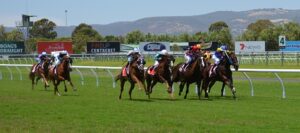 Born on March 22, 1948, William ‘Bill’ O’Gorman is a former racehorse trainer, latterly of Seven Springs Stables, on the Hamilton Road in the Newmarket. After 30 years in the training ranks, O’Gorman effectively ‘retired’ in 1999, at which point he said, ‘I’ve been getting increasingly disenchanted with the direction that racing is taking, catering for bad horses at the expense of good ones.’ However, he retained his training licence to campaign just his own horse, the lowly-rated filly Be My Wish, who had her final outing in a claiming stakes race on the Rowley Mile at Newmarket on September 16, 2000. Reflecting on his decision to carry on, O’Gorman said, ‘I should have retired a long time ago. I probably wouldn’t have bothered if this filly wasn’t a pleasure to do anything with.’
 Joseph Parr is, in fact, the grandson of former trainer Alan Bailey, who retired in January 2020, and, since February that year, has held a training licence in his own right at Frankland Lodge Stables on the Hamilton Road in Newmarket. On his retirement, Bailey sold nearby Cavendish Stables, where Parr had acted as his assistant for the last few years of his career, to James Tate and transferred some of his string the fledgling trainer at his new yard.