

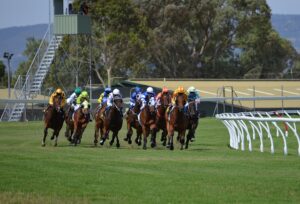
 So you fancy a bet.
As long as you bet responsibly then a little flutter isn’t going to do you much harm. In fact, you may pick a winner. For most punters betting with any aspect of skill is unlikely. Why? Because unless you work tirelessly at your craft you are unlikely to win anything. I don’t advise betting for fun. There’s nothing fun about losing money. If that’s acceptable, then you should question what you are doing.
If betting, you may want to appreciate a few pointers which I have considered long and hard.
Why Betting On The Favourite is a bad idea
Unsurprisingly, the majority of the money bet on a horse race is on the favourite. In fact, on an odds-on shot, it is probably 80% of all the money bet. But with the favourite being such a popular choice is it really worth a bet? The answer is probably no. To be fair, each and every horse can only be judged on its merits. I would be wrong to say that a decent percentages of favourite don’t win and, by their very nature, a winner is value. However, if you bet on every favourite you would lose money. This points to the fact that the only way you can win at betting is related to skill. It isn’t so much about money but your knowledge. This is the foundation to your success. Betting on a favourite in a horse race denotes the strike rate you need to break even or be in profit. Betting even money requires a 50% win rate to break even. From my vast data research and analysis, very few horses, trainers, jockeys or owners detail such a high strike rate.
Why You Need More Value Bets
Betting on favourites can be a distraction to betting on a big priced winner. For that reason, I don’t bet on any horses less than 7/1. You may be reading this and thinking how is this possible. I tell people and they look surprised. I can tell in that moment they are favourite backers. Nothing wrong with that. If you are in profit, you don’t need to listen to my words. If you are losing money you do. Now, this article isn’t going to tell you all you need to know how to win money gambling. You would need to start from a blank slate, learn lots over years and be as disciplined as it takes. There are no short cuts to success. But what I would say is draw the line closer to the bigger odds horses. The more you understand, the more you realise you don’t need to be betting at short odds. In fact, I rarely bet on horses that are not double-figure odds. If that sounds incredible then it is simply do to your lack of skills and understanding of seeing the full, bigger, picture.
How Do You See The Bigger Picture?
You see the bigger picture by looking at the smaller picture. No one can know everything. Wisdom states you don’t need to know everything. You need to know a little more than most. Know your niche. If you are a gambler and you bet on many different sports then you are spreading yourself too thin. In fact, you could do half the work and increased your profit substantially by simply betting more money. If you measure your success by financial return. You may follow horse racing for fun and bet matchsticks. Knowing less better is the answer to the question.
Answers to Questions
Being successful at anything is about knowing answers to questions. If you don’t know the answer to a,b,c then you need to ask yourself why. Why is the motivation of behaviour. If you can’t be bothered to understand your subject matter, hone your skills and learn what it takes to make your betting pay, then either carry on losing or stop betting.
Whatever you do, unless you know better, don’t bet on the favourite.
It’s a good place to start.
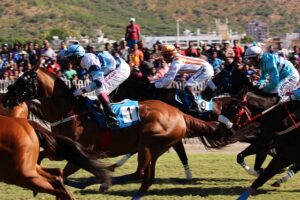 For readers unfamiliar with the name, Dylan Kitts is a 22-year-old conditional jockey attached to the Rhonehurst yard of Warren Greatrex in Upper Lambourn, Hungerford, who, in recent months, has been making headlines for the wrong reasons.
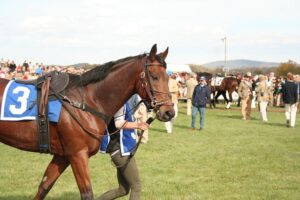 Of course, since 2015, the British Flat season has been truncated, at least as far as the Flat Jockeys’ Championship and Apprentice Jockeys’ Championship are concerned, such that it runs from the Guineas Festival at Newmarket in early May to British Champions Day at Ascot in October. Both championships are decided, as they always have been, on the number of winners ridden in the designated period, albeit nowadays over a period of approximately 24 weeks, rather than the previous 32.
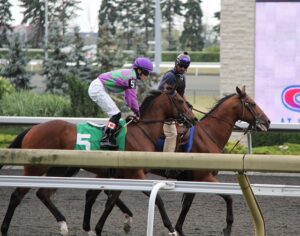 The short answer is yes, there is. Nowadays, most bookmakers settle bets using automated computer systems, which provide faster, more accurate results than traditional human settlers, so the bet is less ‘nightmarish’ than was once the case, but it is still trying enough, not least because of the number of disparate bets involved. Generally speaking, the Bookies’ Nightmare is not an option you’ll see listed with online bookmakers, so you may find it’s a rigamarole to place, never mind settle!